
Water changes the desert story
The Amargosa supports riparian habitat in a landscape better known for dryness. BLM describes archaeological evidence of Indigenous occupation along the river over thousands of years. This is a lived-in landscape, not an empty backdrop to recreation.
THE TRAILA route through difficult country
The Old Spanish Trail crossed the Amargosa corridor. Its relationship with water helps explain why travelers passed through this part of the desert. Today, the historic route and recreation access have different meanings; a trail’s history does not grant motorized access.
SALT CREEKStep off the machine to explore
BLM’s guide connects Salt Creek with nineteenth-century trail travel and mining. Its interpretive walk visits the area’s cultural and natural story. OHV use is prohibited within the Salt Creek ACEC. Leave objects where they are and stay out of abandoned mine workings.
TODAYRecreation with a responsibility
BLM’s account of Dumont emphasizes its relatively undeveloped recreation experience and the care visitors must bring to it. A successful weekend leaves the place ready for the next group.
When the dunes have a voice
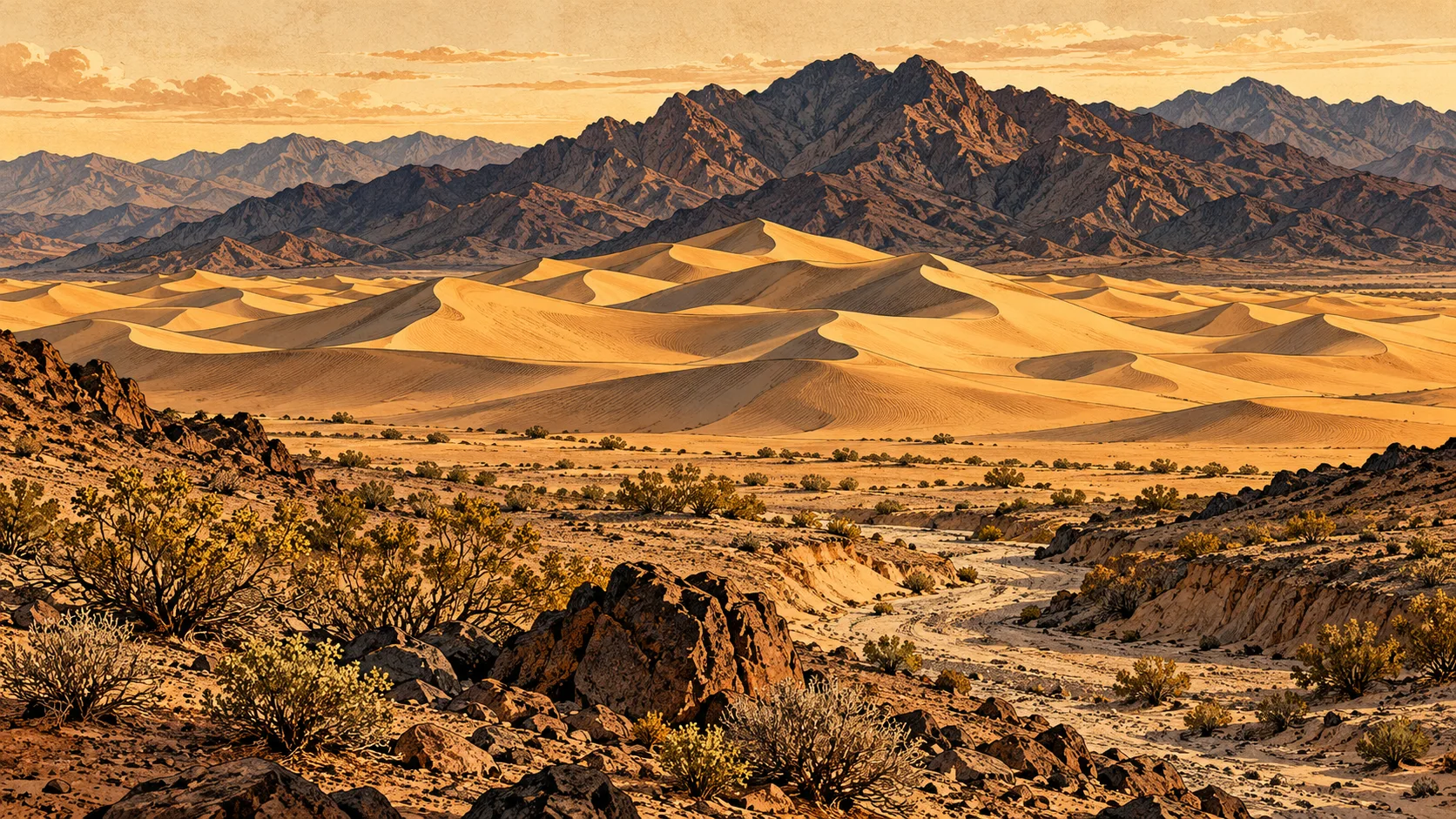
Dumont is among the dunes studied by Caltech researchers for booming sand. Under suitable conditions, moving sand produces a sustained low hum. It is a natural phenomenon, not a sound visitors can count on hearing every trip.
Caltech field research · Checked September 10, 2026
Independent visitor guide. Published by MCKINNEY DIGITAL HOLDINGS LLC. Not affiliated with or endorsed by BLM Barstow.
Sources reviewed September 10, 2026. Current agency notices and on-site signs control.